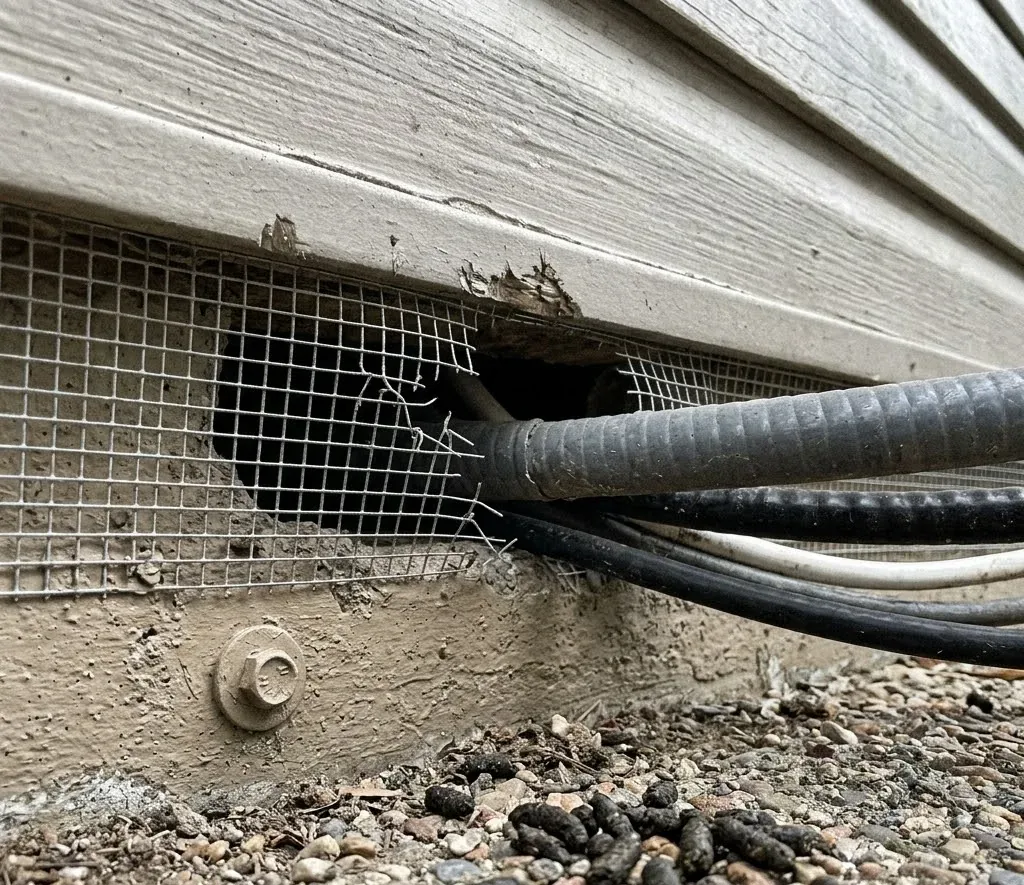
Where Copper Mesh Helps Seal Rodent Gaps
Copper mesh can fill selected small, irregular rodent gaps; seasonal checks help you review its fit, finish, and exposure.
Copper mesh can be packed into some small, irregular rodent gaps when firm edges can hold it in place. Check the opening’s size, depth, location, moisture exposure, and nearby materials. A fit that leaves exposed spaces may call for another repair approach.
Check Small, Uneven Gaps First
Rodent-exclusion cost depends on how easy the opening is to reach, whether its edges can hold a filler, and what finishing work it needs. During a seasonal check, start by looking for signs of activity, then inspect the suspected gap before choosing a material. Copper mesh can fit some small openings with uneven edges, but the right choice depends on the space and its surroundings. Repeated moisture exposure can also change which repair materials suit the opening.
A seasonal walk-through may reveal a small void with an uneven outline near a wall or foundation. Copper mesh can be pressed into certain compact gaps, where its strands take the shape of the opening and occupy space rodents might use to pass. It is a rodent gap filler, not a universal fit: the opening must be narrow enough for the material and have edges that can keep it seated. Check the whole gap before deciding whether mesh suits it.
The weave matters when you assess what a repair will accomplish. Copper mesh for mice can fill space inside a suitable opening, yet air and light may still pass through its strands. If you can see through the repair or feel air moving at the surface, the mesh has not made a continuous barrier. A separate finish may be needed, depending on the opening. During the seasonal check, note whether you need a packed insert or a solid, finished face.
Review the Surface Finish
Next, look for signs that the location stays wet or gets wet during ordinary use. Persistent moisture can affect nearby finishes, and copper touching other materials may create additional compatibility concerns. These conditions matter because the mesh sits inside the opening while the surrounding surface remains exposed. If you see staining, soft finish, or corrosion nearby, record what the copper would contact before choosing a repair. A dry, sheltered spot presents a different set of conditions from a damp one.
After checking exposure, test whether the edges appear firm rather than crumbly or loose. The strands need a stable boundary to stay compressed in place; damaged material may let them work free. Seasonal checks are a useful time to notice movement or fresh deterioration around an opening, especially where the insert would be difficult to inspect later. If the edge cannot hold its shape, repair that surface first or consider another approach suited to the opening.
If you handle copper mesh yourself, protect your hands while cutting or pressing it into a gap. The cut strands can have pointed ends that scratch skin, and they may catch on nearby surfaces as you work. Wear gloves, keep children and pets away from loose material, and clear scraps when finished. These precautions apply whether you are preparing a seasonal inspection or making a repair; they do not change whether the opening is a suitable place for mesh.
Look for Moisture and Contact
A change in activity can make a previously quiet gap worth checking again. Those signs can indicate rodent activity, but the opening still needs a separate fit assessment. A small irregular gap with firm edges may suit a packed insert. Keep the notes together so the material choice reflects both the observed activity and the actual shape of the gap.
Then decide whether the opening needs a smooth, continuous surface or must support something beyond a filler. Mesh has a woven structure, so it cannot provide a rigid face or structural strength. Strands may loosen when the surrounding edges cannot grip them evenly. The seasonal review helps clarify that requirement before material is selected; look at what the finished surface must do, not only at whether mesh can be pushed into the gap.
Choose a Firmer Repair When Needed
For rodent exclusion, the amount of work depends on access, the shape and depth of the gap, and the condition of the surrounding surface. A compact opening that is easy to reach may take less fitting and finishing than a recessed spot with damaged edges. Damaged edges can add preparation work before the filler is fitted. When comparing estimates, check whether they account for preparing the opening and adding any finish needed to make the surface continuous.
At the end of the seasonal check, note whether the mesh remains seated and whether the surrounding finish has changed. A shifted insert or a newly visible gap means the repair may need attention. A change in the nearby finish can show that the repair has shifted. These checks connect the material choice to what you observe afterward, without treating mesh alone as a complete rodent-control measure.
Seasonal Checks for Copper Mesh
- Record the opening’s width, depth, position, and edge condition before deciding whether the mesh can stay seated.
- Inspect the edges for damage that could affect how well a packed insert stays seated.
- Include any needed opening preparation and finish when reviewing the repair.
- Check whether the gap is shallow or deep and whether its uneven edges let mesh stay seated without leaving an open path.
- Look at the finished surface: packed mesh may remain visible, so note whether the repair needs a separate covering to close it.
- During this season’s check, note persistent moisture and materials touching the copper; these conditions can affect which repair is appropriate.
Rodent Control Guide
Where can copper mesh help block rodent access?
It functions as filler, so it cannot replace a cover that must stay rigid. Its flexible weave can occupy an irregular space that is difficult to fit with a shaped insert. The gap still needs checking for size, depth, and exposure. Mesh may limit passage through the filled area, but it does not automatically create a finished surface.
Does packed mesh need a surface covering?
No. Copper mesh is woven, so spaces remain between its strands. It can fill part of a suitable opening, but a separate finish may be needed when the repair requires a continuous surface. Whether that added material is appropriate depends on the gap and what surrounds it.
What should I inspect around copper mesh this season?
Look for signs that the opening remains damp, then identify the materials that would touch the copper and check the adjacent finish for deterioration. A deteriorating finish may need attention before the opening is filled. If the conditions raise concerns, select a different suitable material or address the surface before fitting mesh.
Review the Gap Before Choosing Mesh
Share the gap’s size, position, and exposure with the pros we connect you with to discuss a suitable repair for your home.
Call (866) 583-0187