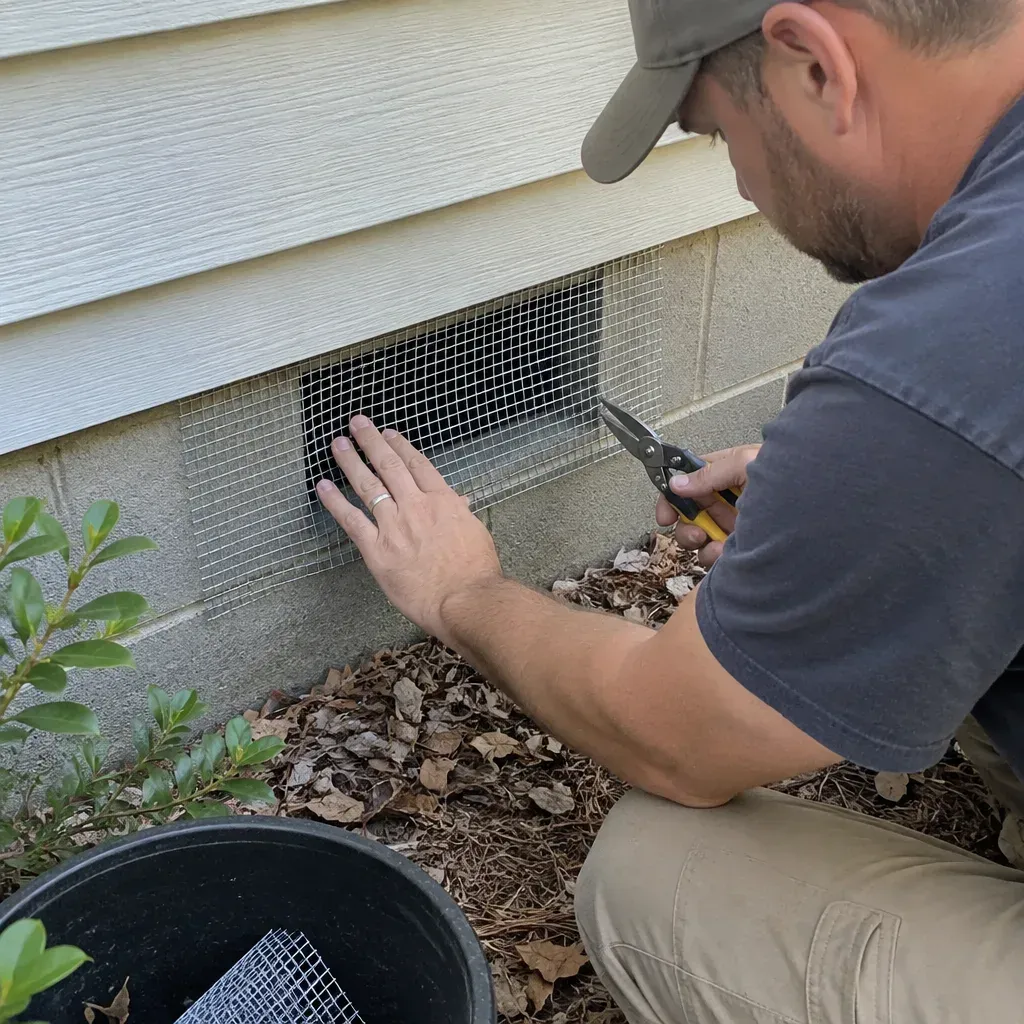
Where Hardware Cloth Helps Block Rodents
Use this season’s checks to find openings suited to hardware cloth, then consider mesh, attachment, and upkeep.
After fitting a panel, check that its edges remain tight and the frame has not shifted. Measure the space, choose mesh suited to the rodents, and fasten it to a sound border while preserving airflow and access.
Find Openings Suited to Mesh
A firm frame helps the screen hold its shape when the cover is handled or opened for access. Hardware cloth is a wire screen that lets air pass while separating rodents from the space behind it. For mice, choose mesh openings that leave no route through; secure the full perimeter so an edge cannot lift away. Measure first, and preserve airflow or needed access. Check the cover for loosened fasteners, bent wire, or new gaps during later inspections.
On a ranch or split-level, walk the exterior and look for a missing or torn screen across a defined opening. Hardware cloth is a rigid wire mesh that can serve as a barrier when a panel can span the space and meet a stable frame. A soft or crumbling frame can leave gaps around a panel, even when the mesh is intact. Note each candidate opening before choosing a panel, so the cover matches the job and does not block a needed function.
Before covering an opening, check what passes through it and what needs to reach it. A foundation vent must still move air, while some exterior openings need to stay available for service. A fitted piece of rodent mesh can close a broad route only if the building can keep working as intended. On a subdivision lot, for example, a covered vent should remain clear enough to do its job. Record the opening’s purpose along with its width and height for the next step.
Match Mesh to the Opening
Next, choose mesh openings small enough for the rodents the barrier is meant to exclude, and wire sturdy enough for the setting. Hardware cloth for mice needs a close mesh; a larger grid can leave access through the panel. Check the product’s material and construction rather than judging by appearance alone. At a seasonal review, compare the installed mesh with its original condition: a torn or distorted area may no longer provide a reliable barrier, even if the frame still looks sound.
Look for signs of water exposure when checking the mesh finish. A panel near damp ground or in a spot exposed to rain can corrode, and rust may weaken the barrier over time. The suitable material depends on where the cover sits and what it encounters. If you see discoloration or flaking, note the affected area and check whether the wire remains firm. This is a material check, separate from confirming that the panel still fits its opening.
Measure the opening across several points, especially when the frame looks uneven or out of square. Use those readings to plan a panel that reaches a firm border all around; cutting to one narrow measurement can leave another edge exposed. A useful seasonal record includes the dimensions and any change in the frame, so a replacement can be sized accurately. Hardware cloth helps only where the panel covers the route without leaving a passable gap along its perimeter.
Check the Fit Around Edges
Before fastening a cover, press lightly on the frame and check for movement, decay, or crumbling. Hardware cloth needs a dependable surface to hold it; fasteners placed into weak material can loosen and let an edge lift. Look at the full mounting border, not just the corners. If the support is damaged, the panel alone will not close the route. The attachment method depends on the frame material and opening, so note what the fasteners will need to grip.
Think about access before fixing the panel in place. Some screened openings need periodic cleaning or service, and a cover that cannot be reached may interfere with that work. Where access matters, the attachment can be planned so the mesh can be removed and refitted without bending it. During a seasonal check, confirm that the opening remains reachable and that removing the panel has not loosened its border. The right arrangement depends on the opening’s purpose and the condition of its frame.
Inspect Covers as the Season Changes
After installation, inspect the mesh and its perimeter in sequence: look for rust or bent wire, then check for loose fasteners and lifted edges. A small gap where the panel meets the frame can leave an entry route even when most of the opening is covered. Dust or debris along the border can make a lifted edge harder to notice during a quick check. If the frame has shifted, assess that support as well as the screen before deciding whether the barrier remains secure.
Keep a simple record of the opening, panel material, attachment points, and condition at each seasonal review. That makes changes easier to spot and gives a clearer basis for estimating rodent-exclusion work. A straightforward panel on a sound, accessible frame involves different work from one that needs difficult cuts, replacement support, or careful access planning. Hardware cloth addresses the covered opening; it does not by itself establish whether other routes remain open or whether rodent activity continues.
Seasonal Cover Check
- At the seasonal walkaround, note each broad opening and what it must continue to do, such as pass air or allow service.
- Compare mesh spacing, wire condition, and material with the opening’s purpose and exposure before planning a fitted panel.
- Trace the full perimeter for rust, distortion, shifting fasteners, or an edge that has pulled away from its support.
- Start with the opening you want to screen; record its width, height, nearby airflow, and any access needed for inspection or servicing.
- Choose mesh openings and wire strength for the rodents and exposure involved; finer or sturdier material can affect fit and installation effort.
- During seasonal checks, look for corrosion, distorted mesh, loose fasteners, and edges pulling away from the frame; each can leave a route open.
Rodent Control Guide
Where can hardware cloth help keep rats and mice out?
Hardware cloth can screen a broad, clearly framed opening, including a foundation vent or damaged exterior screen, when the frame can hold the panel securely. First identify the opening’s purpose, then measure it and check that a fitted cover will preserve airflow or service access. The panel should meet a sound border around its perimeter; a loose or incomplete fit can leave a route beside the mesh.
How should hardware cloth be secured around an opening?
The work involved depends on the opening’s dimensions, the mesh material, the condition of its frame, and how reachable the edges are. A panel that needs custom cutting or a different attachment plan can take more work than one fitted to a sound, accessible border. If an old screen must be removed or the support needs attention, that can also affect the estimate. No single material or installation suits every opening.
What should I check on a hardware cloth cover?
Review the cover during seasonal exterior checks and after work that could disturb its frame. Look for corroded or bent wire, fasteners that have shifted, and any edge that no longer sits flat. Also confirm that a vent still moves air or that a service opening remains usable. A sound-looking panel can still have a gap at its border, so check the mesh and its full perimeter together.
Measure the Opening Before You Ask
Check the edges for gaps where animals could get through.
Call (866) 583-0187