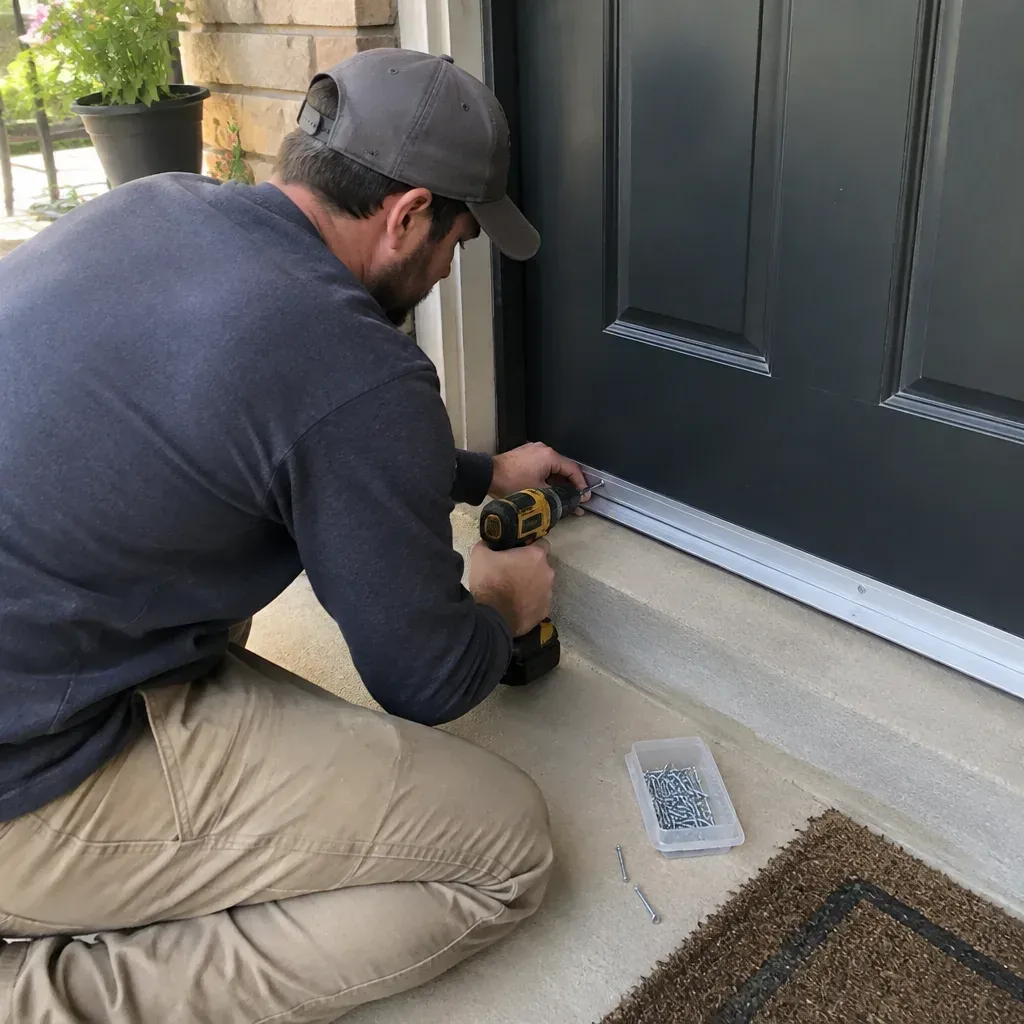
Can Door Sweeps Block Rodent Entry Nationwide?
See how a sweep covers the bottom gap, then check its fit, floor clearance, wear, and limits around the rest of the doorway.
If the door becomes harder to close after a sweep is added, the strip may be pressing too firmly against the threshold. Check for uneven contact, wear, and other openings around the doorway; a sweep covers only the bottom edge.
Trace the Gap Beneath the Door
Rodent-exclusion cost can depend on the door opening, the threshold, and how a sweep needs to fit. A rodent door sweep is fitted along the door’s lower edge to reduce the space beneath it when closed. Begin by looking at the shut door from inside and outside: notice whether light shows beneath the edge, and whether the gap appears similar from one end to the other. That first view helps you judge whether a sweep could address the opening you see.
Look along the entire bottom edge, since a gap that seems closed near the handle may widen toward the hinge or at the center. Compare the distance from the door to the sill at several points, then note the widest space. A ranch entry or a split-level side door can have a different threshold profile, so the gap on one door does not predict the fit on another. The width and consistency of the opening are useful starting points when comparing sweep specifications.
A sweep needs to meet the threshold while leaving the door free to move. Check the sill height and the space available as you swing the door; a strip that reaches low enough when shut may drag as the door opens. A product described as mouse-proof still has to suit the actual doorway. Compare its stated fit range and clearance requirements with what you observed, rather than relying on the label alone.
Compare Sweep Fit and Clearance
If a sweep is already present, look at its contact edge for cracks, missing sections, or material that has become curled. Those changes can leave a narrow route beneath the door even if most of the edge still appears to touch the sill. The condition matters across the full width: a small break at one end can undermine an otherwise close fit. Record what you see before deciding whether the existing sweep still matches the opening.
Watch how the sweep sits when the door is closed. A rail that has shifted, a loose attachment, or a bowed section can make the contact line uneven. You may see daylight beneath one part while the rest appears flush. That pattern points to inconsistent contact, not necessarily a gap that a different sweep alone would solve. Note where the edge lifts or moves, then compare those observations with the product’s installation and fit guidance.
The threshold itself can change how a sweep meets the floor. A shallow dip may leave a visible opening, while a hump can press the strip upward or make it catch. Uneven flooring near an exterior door can create the same sort of variation. Look at the sill from end to end with the door shut and notice whether contact changes where its surface rises or falls. A sweep’s performance depends on that meeting surface as well as its size.
Observe Floor Changes and Wear
Before judging contact, notice whether grit or other loose material is sitting on the sill. Debris can hold the edge away from the surface and make a close fit appear open in one spot. Once you can see the threshold clearly, check whether the same gap remains. This observation separates a temporary obstruction from a mismatch in the sweep, door, or sill, and helps you describe the condition accurately when comparing options.
A sweep covers only the space under the door. With the door closed, look at the rest of the doorway too: light or a visible opening beside or above the door marks a separate route that this strip does not address. Keep those observations distinct. If rodent signs appear near the entry, an inspection can assess them and look for possible access points; a sweep by itself does not establish where rodents entered.
Know Where Sweep Coverage Ends
Operate the door at a normal pace and pay attention to sound and feel. Scraping, resistance near the sill, or a sweep that shifts as the door moves can indicate that clearance or alignment is poor. Then close it and check that it latches as expected. This final observation connects the apparent seal with everyday use: a strip that closes the lower gap but interferes with movement may not be a suitable fit for that door.
Rodent exclusion cost can depend on the doors involved, their width, and whether the threshold gives a sweep a steady surface. A rodent door sweep attaches along the bottom edge and meets the threshold when the door closes, narrowing the gap while allowing the door to move. Check the full width, including corners, and compare the opening with the sweep’s fit range and floor clearance. A mouse-proof door sweep, including products marketed for door sweep rats, cannot compensate for a warped door, worn threshold, or floor dip. Nearby openings may need separate assessment.
What to Observe at the Door
- With the door shut, note where the bottom opening is widest and whether the gap changes from one end to the other.
- Compare the sweep’s stated fit and clearance requirements with the doorway’s gap, sill height, and threshold shape.
- Open and close the door; observe scraping, shifting, resistance, or a latch that does not engage as expected.
- With the door closed, follow the threshold from one side to the other and note any visible space remaining below the door.
- Compare the sweep’s reach with low and high spots in the floor; a changing threshold can leave an uncovered section.
- Look for torn material, loose fasteners, or a bent support, and notice whether the strip drags or lifts as the door moves.
Rodent Control Guide
Can a door sweep help if my threshold is uneven?
Yes. A fitted sweep should still allow the door to close and latch normally. Its usefulness depends on whether it fits the opening, contacts the threshold across the width, and clears the sill as the door moves. A sweep addresses that bottom gap; it does not cover openings elsewhere around the doorway or confirm that rodent activity has stopped.
How can I tell if my sweep is rubbing too much?
An uneven sill can interrupt contact along the bottom edge. A low section may leave space under the sweep, while a raised area can press against it or cause catching as the door moves. Dirt or debris on the threshold can also keep the strip from resting evenly. The threshold shape and door clearance both matter when judging whether a sweep can fit the opening.
Will a bottom sweep cover gaps at the sides of the door?
Look for a split, curled edge, worn contact surface, or attachment that has shifted. Loose fasteners can let part of the strip hang lower than the rest. These signs can show that the sweep’s condition or alignment has changed and that its fit may need reassessment.
Ask About Sweep Fit
The licensed pros we connect you with can help you consider sweep attachment and door movement when comparing ways to close a bottom gap.
Call (866) 583-0187