Compare Body Size and Shape
Treat the first impression as a clue to check against the animal’s other visible features. Rats tend to look larger and more solid, while mice tend to have smaller, finer proportions. In a ranch or split-level home, the sighting may be brief or partly blocked, so treat body size as your first check rather than a final identification. Record the room and what provided scale.
Next, look at the outline for details that support the size estimate. Compare the visible features together before settling on an identification. You may not see every feature at once, especially if the animal is moving or viewed from across a room. Note only what was visible, and keep the comparison tentative until you consider other signs.
Check Droppings for Relative Size
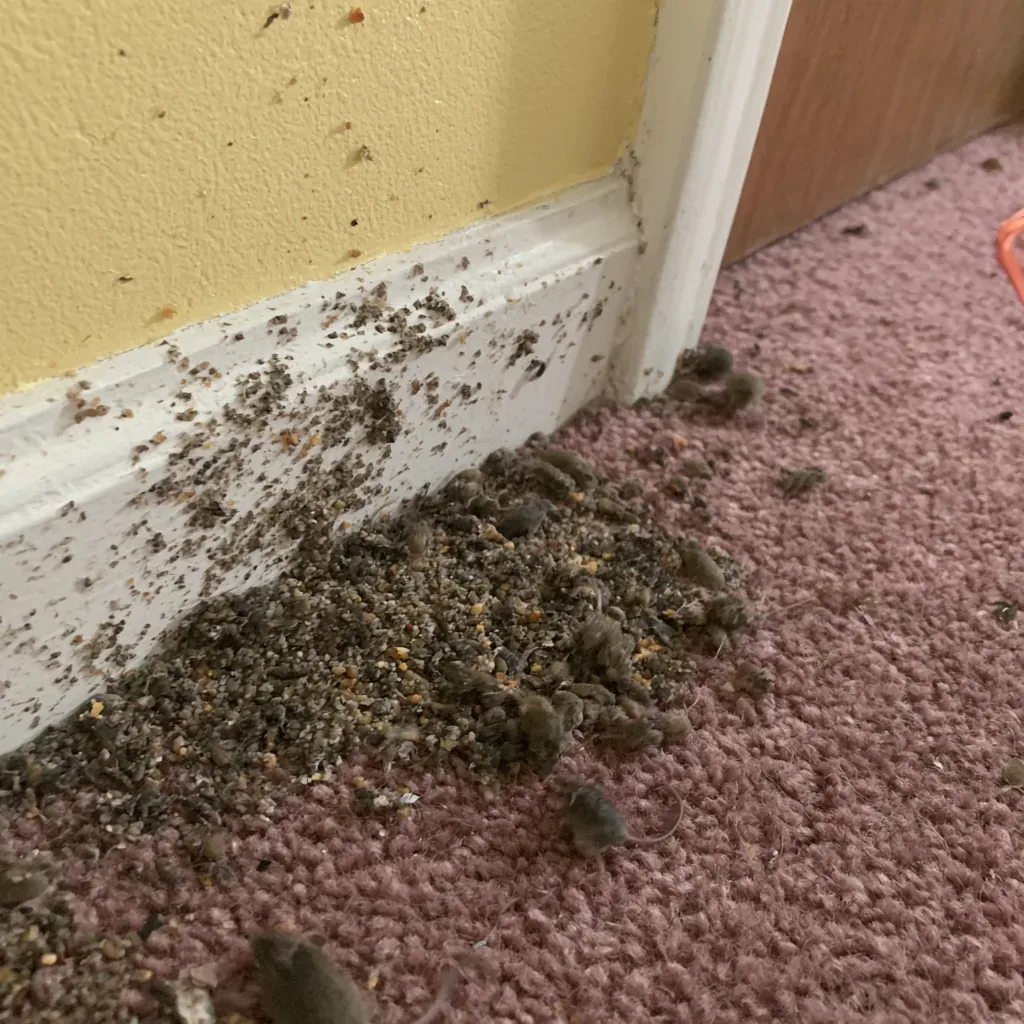
Then compare droppings by their apparent size, without touching them or moving closer. Larger pieces can support a rat identification, while smaller pieces can fit a mouse. Use a familiar object already nearby as a scale reference if it is visible in the same area. Size is a clue, not proof: the pieces may be old, partly obscured, or difficult to judge from where you can safely stand.
After noting size, record where you saw the droppings and whether similar signs appear in another room. Describe the droppings separately from the animal’s appearance. Keep this check separate from the size comparison so one uncertain clue does not outweigh the others.
Note Gnawing and Sounds
Now look for gnawing nearby, such as tooth damage on packaging or wood. It can support the conclusion that a rodent has been active, but the mark by itself usually cannot distinguish a rat from a mouse. Note what surface is damaged and where it is, without handling debris. In a subdivision home, stored items may hide part of a mark, so describe what you can actually see.
Listen for scratching or movement, then write down the room and when you heard it. Sound can help place activity, but walls, floors, and stored belongings can make its source seem closer or larger than it is. Treat noise as context for the visual checks, not as a size test. A repeated sound still cannot settle rat vs mouse if you never saw the animal.
Weigh Clues and Record Details
Finally, weigh the checks together: body build and tail give you the clearest visual comparison, while droppings, gnawing, and sound add context. If several clues point the same way, you may have a reasonable impression of which rodent was present. If they conflict, leave the identification open. Rats and mice can both leave signs indoors, and no single clue guarantees the answer.
Before seeking an assessment, note the room, approximate size, visible features, and nearby signs. A brief glimpse may not show the tail or provide a reliable scale, so an exact identification can remain uncertain. What did you see clearly, and what are you inferring from the other clues? Keep your notes focused on details you observed and label any conclusions as tentative.
Dealing with rodent activity in your home?
Your inspection cost starts with the scope of the visit; $80–$175 displays the current band. Describe what prompted your request so the licensed pros we connect you with can discuss the visit’s scope. Locations with their own pages are described separately; requests from other places use the same referral. Ask the pros we connect you with whether they serve your address, what the visit includes, when an appointment is available, and what charges apply.